This glossary contains the words people can use to everyday in accounting.
Accounting
Noun
The action or process of keeping financial accounts.
Example: The actual change concerns the accounting system and information system, particularly important to the distribution of power within organisations. "...
en: Comptabilité
Accounting cycles
Noun
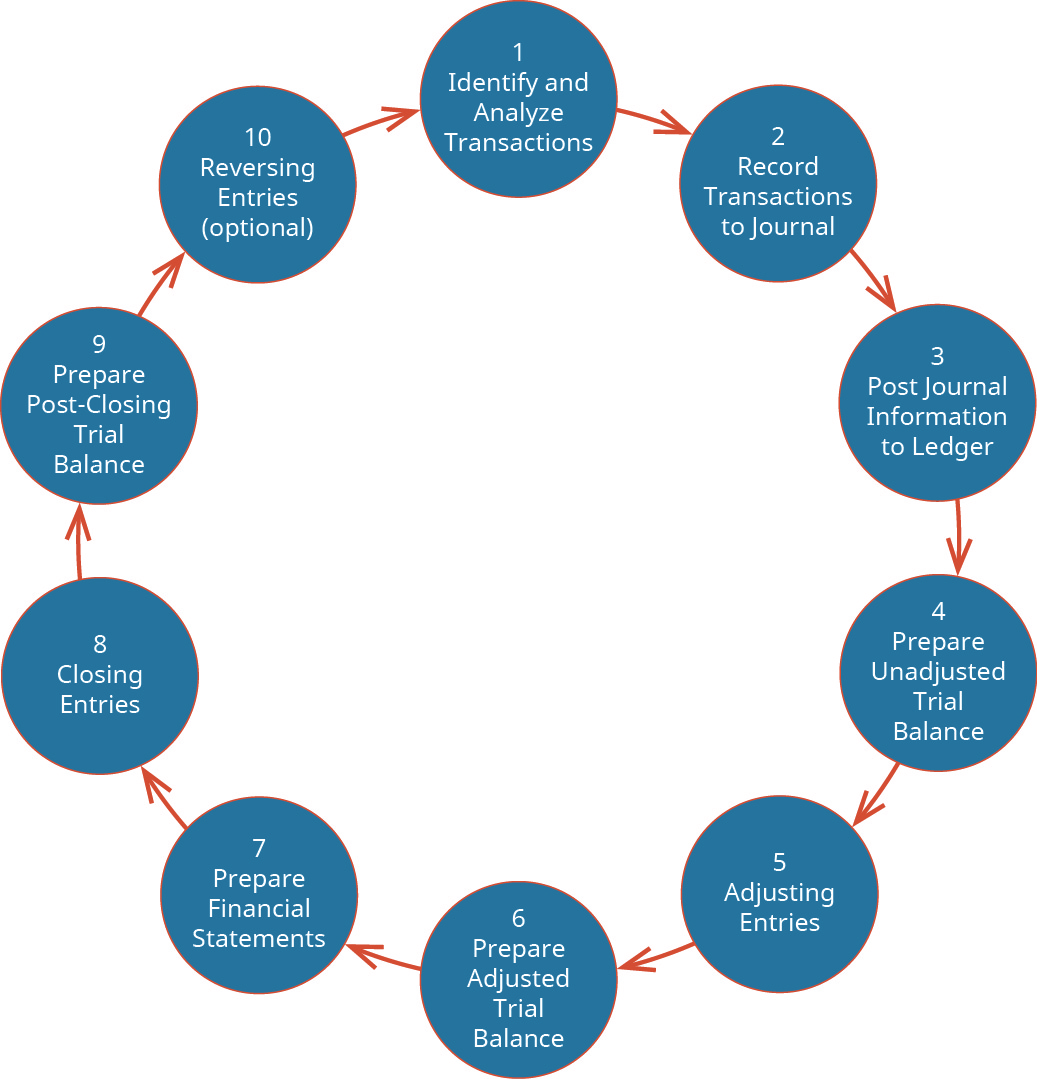
The accounting cycle is a collective process of identifying, analyzing, and recording the accounting events of a company.
Example: Do the accounting cycles.
en: Cycles comptable
Accounting payables
Noun
Accounts payable (AP) is an account within the general ledger that represents a company's obligation to pay off a short-term debt to its creditors or suppliers.
Example: Pay accounts payable.
en: Comptes créditeurs
Accounts receivables
Noun
Accounts receivable is an asset account on the balance sheet that represents money due to a company in the short-term.
Example: Audit accounts receivable.
en: Comptes débiteurs
Assets
Noun
Property owned by a person or company, regarded as having value and available to meet debts, commitments, or legacies.
Example: Furthermore, this will permit a better management of the firm's assets, possibly even enabling it to benefit from future investment opportunities, as they will have some constancy in their revenue figures, and to make long-run plans.
en: Actifs
Customer
Noun
A person or organization that buys goods or services from a store or business.
Example: At this minimum cost, the yarn to be produced should be 320 metres and the remaining 180 metres are to be bought in. 20% reduction in cost of bought in yarn will decrease the price from £21 to £16.80.
The implication of this is that the total cost will be minimised.
At a reduction of 30% off the current price, the price is reduced to £14.70 but the supplier is less reliable.
This reduced price will result in a much lower total cost than the first case.
The amount of yarn to be produced if extra 700 hours use of vats comes into being remains the same at its current value.
It is suggested that 80 hours of the spare carding and combing machine should be bought in order to utilise the twisting machine fully.
The cost for this machine shall not exceed £120.
When the cost of fibre increases by £1 per metre of standard width cloth equivalent, it is recommended that a negotiation with the supplier should be done in order to get the 20% reduction in the cost of bought in yarn since this will be able to drive down the total cost.
en: Clients
Damping
Noun
A decrease in the amplitude of an oscillation as a result of energy being drained from the system to overcome frictional or other resistive forces.
Example: Take depreciation on the boat.
en: Amortissement
Deficit
Noun
In financial terms, a deficit occurs when expenses exceed revenues, imports exceed exports, or liabilities exceed assets.
Example: Therefore, the current trust deficit between divisions is improved.
en: Déficit
Equity capital
Noun
Equity is used as capital raised by a company, which is then used to purchase assets, invest in projects, and fund operations.
Example: Just as the chairman Heinrich von Pierer stated, 'We are in a global competition for loan and equity capital'.
en: Capitaux propres
Financial statements
Noun
Financial statements are written records that convey the business activities and the financial performance of a company. Financial statements are often audited by government agencies, accountants, firms, etc. to ensure accuracy and for tax, financing, or investing purposes.
Example: Make financial statements.
en: États financiers
Liabilities
Noun
A thing for which someone is responsible, especially a debt or financial obligation.
Example: Jolly SU has no loan history and therefore has no liabilities in the form of loan repayments.
en: Passifs
Money
Noun
The assets, property, and resources owned by someone or something; wealth.
Example: Quality and Reliability: Keyboards are usually used for the whole of the working day so most manufacturers of keyboards offers some form of money back guarantee to attract potential customers.
en: Argent
Negotiate
Verb
To arrange for or bring about by discussion and settlement of terms: to negotiate a loan. to manage; transact; conduct: He negotiated an important business deal.
Example: The department should look to negotiate a 20% discount with the current external suppliers of yarn as this will help reduce overall costs.
en: Négocier
Provider
Noun
A person or thing that provides something.
"a leading provider of personal financial services"
Example: If these assumptions are not the case, then the project specific risks 1 and 2 will be high, so I would recommend outsourcing using a turnkey provider if the cost implications are manageable.
en: Fournisseurs
Taxation
Noun
Taxation is a term for when a taxing authority, usually a government, levies or imposes a financial obligation on its citizens or residents. Paying taxes to governments or officials has been a mainstay of civilization since ancient times
Example: Another effect that has been ignored is taxation.
Ignoring tax is likely to overstate the NPV of the project because taxation affects the cash flow in terms of capital allowance and tax charge.